
Darlington County Criminal Court Records
Darlington County criminal court records are kept mainly through the Clerk of Court and the court that heard the charge. The Clerk page says the General Sessions / Criminal Division receives, files, indexes, and houses warrants, bond paperwork, motions, and other criminal filings. It also reports dispositions to SLED and maintains criminal court paperwork. That makes the court file different from a booking record, which is tied to custody, jail intake, and release status.
South Carolina Circuit Court is the general jurisdiction trial court. In Darlington County, Circuit Court includes General Sessions for criminal prosecutions and Common Pleas for civil cases. Magistrate Court and Municipal Court handle lower-level criminal matters, traffic, warrants, bond, and preliminary hearings. Some cases start in summary court, while more serious charges may move into General Sessions. For the arrest-to-charge side of the record, use the court charge records page; for the full court case, stay with the criminal court record.
Search Darlington County Criminal Records
The main case search path is the South Carolina Judicial Branch Case Records Search and the Darlington County Public Index. Search by case number when possible. When the case number is unknown, search by defendant name and narrow by court agency, case type, date range, or action type. The Judicial Branch notes that cookies and JavaScript must be enabled, and some browsers require a pop-up exception for case detail.
- Open the South Carolina case records page or the Darlington County Public Index.
- Search by criminal case number, defendant last name, first name, or business name if a business is involved.
- Filter by court agency, case type, date type, date range, action type, or case subtype when the fields are available.
- Open the case detail and read the docket, charges, court events, disposition, sentence, and financial fields that are visible.
- Request certified copies from the Darlington County Clerk of Court when a formal court document is needed.
South Carolina also provides a CDR code search for criminal charge code research.
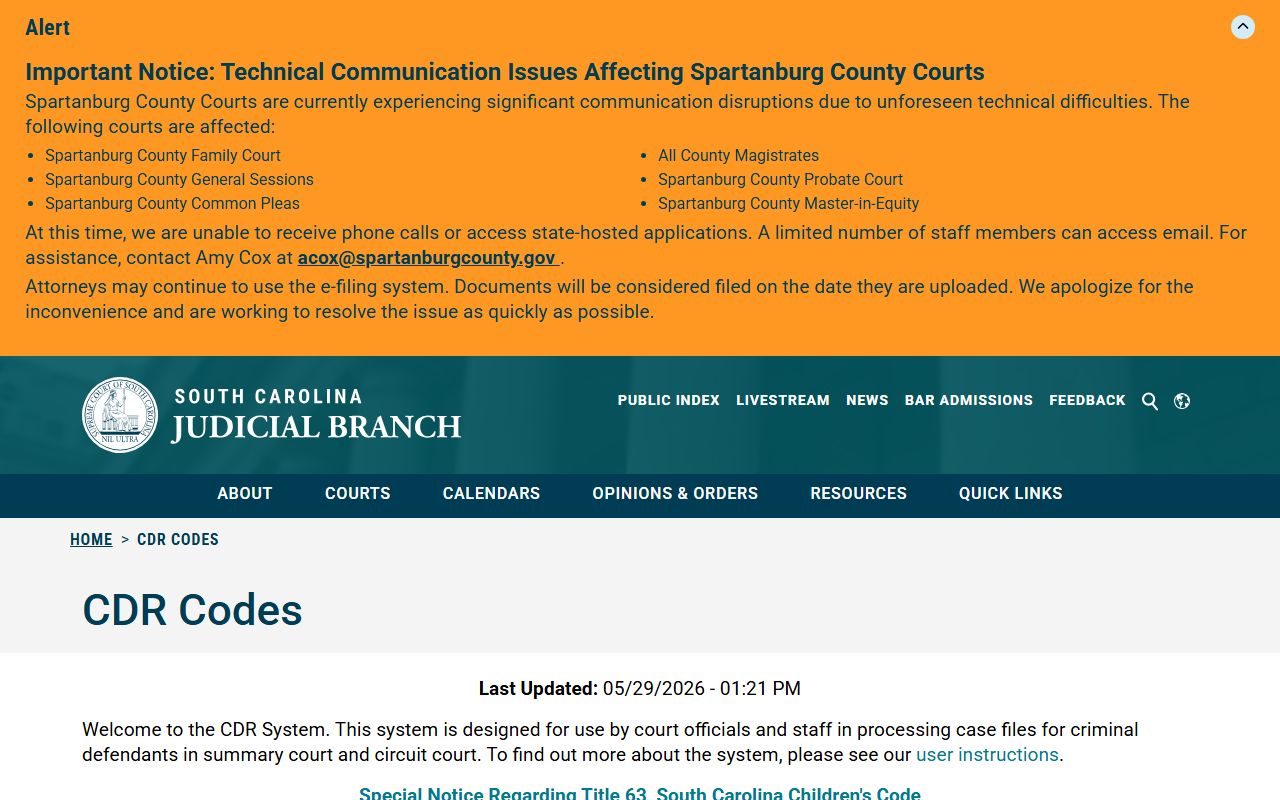
CDR codes help explain the charge label in a Darlington County criminal court record, but the case docket controls the filed charge and outcome.
Darlington County Criminal Case Stages
A criminal court record grows as the case moves. The first public court entries may reflect an arrest warrant, bond paper, charging document, or initial court action. Later entries can show arraignment, motions, continuances, plea hearings, trial events, disposition, sentencing, probation conditions, restitution, fines, or costs. One case can contain several separate charges, and each charge can have a different result.
Case flow: Charges Filed › Arraignment › Pretrial / Motions › Plea or Trial › Disposition › Sentencing
| Stage | What Happens |
|---|---|
| Charges Filed | The prosecutor or court receives formal charge paperwork, such as a warrant, indictment, or other charging entry. |
| Arraignment | The defendant is advised of the charge and enters or preserves a plea path. |
| Pretrial / Motions | Attorneys file requests, bond issues may be heard, and the court may enter orders or continuances. |
| Plea or Trial | The case is resolved by plea, trial verdict, dismissal, or another lawful disposition. |
| Sentencing | The court imposes jail, prison, probation, fines, costs, restitution, conditions, or other sentence terms after conviction. |
Darlington County Criminal Record Fields
A Darlington County criminal court record is strongest when the fields are read together. The charge field alone does not prove guilt. A bond field does not show final outcome. A disposition may apply to one charge while another charge remains pending or has a different outcome. The docket history should be checked before drawing a conclusion from a single line.
| Field | What It Shows |
|---|---|
| Case Number | The official court identifier used to search or request the criminal case file. |
| Defendant | The person charged in the criminal case, sometimes with related party or attorney fields. |
| Court / Agency | General Sessions, Magistrate, Municipal, Bond Court, or another court tied to the criminal matter. |
| Charges | CDR code, offense description, statute, class or type, charge court type, and related bond data when available. |
| Docket Entries | Filings, hearings, motions, continuances, orders, plea events, disposition, and sentencing activity. |
| Plea | The defendant's answer to a charge, such as guilty, not guilty, or another plea reflected by the court. |
| Disposition | The current or final outcome, such as dismissed, guilty, not guilty, disposed, closed, or transferred. |
| Sentence | Punishment or conditions after conviction, which may include confinement, probation, fines, costs, or restitution. |
Charges vs Convictions
Being charged is not the same as being convicted. A Darlington County criminal court record can show accusations that were reduced, amended, dismissed, transferred, or resolved by plea. The final disposition and sentence fields are the key pieces for determining whether a charge became a conviction. A criminal case can also show a not-guilty result or dismissal even though the charge remains visible in a historical docket.
| Charge | Conviction | |
|---|---|---|
| Meaning | An accusation filed or processed through court | A finding or plea establishing guilt |
| Record Stage | Appears early in the case | Appears after plea, verdict, or other final action |
| Proof Level | Based on formal accusation and probable cause path | Requires proof beyond a reasonable doubt or a valid guilty plea |
| Public Record | Often visible unless restricted | Often visible unless sealed, expunged, or otherwise restricted |
Darlington County Dispositions
Disposition language can be short, so context matters. Dismissed means the charge or case was ended by the court, though some dismissals may allow refiling depending on the record and law. Guilty means a plea or finding of guilt. Not guilty means the charge was not proven. Transferred can mean the matter moved to another court or level. Closed means the court has ended active handling, but it does not always explain the legal result by itself.
Sentencing entries should be read with the conviction field and charge line. A sentence may include custody, suspended time, probation, restitution, fines, court costs, or special conditions. Bond is different. Bond relates to pretrial release and appearance, while sentence follows conviction. For jail custody status or booking detail, use the inmate records path rather than treating the court docket as a jail roster.
Sealed and Expunged Criminal Records
South Carolina treats sealing and expungement as different access outcomes. Sealing limits public access by court order. Expungement is a legal process that removes, seals, or destroys eligible criminal records of an arrest, charge, or conviction. The South Carolina Judicial Branch routes expungement applicants by court level, including General Sessions, juvenile records, and Magistrate or Municipal Court matters.
| Sealed | Expunged | |
|---|---|---|
| Public Visibility | Hidden or limited by court order | Removed, sealed, or destroyed where law allows |
| Legal Source | South Carolina Rule of Civil Procedure 41.1 and court order standards | S.C. Code Title 17, Chapter 22 and related expungement rules |
| Access | May still be available to the court or authorized users | Very limited after the process is completed |
| Eligibility | Depends on court findings and the need to seal | Depends on offense type, disposition, waiting period, prior record, and court level |
The Judicial Branch provides a criminal expungement application process by court level.
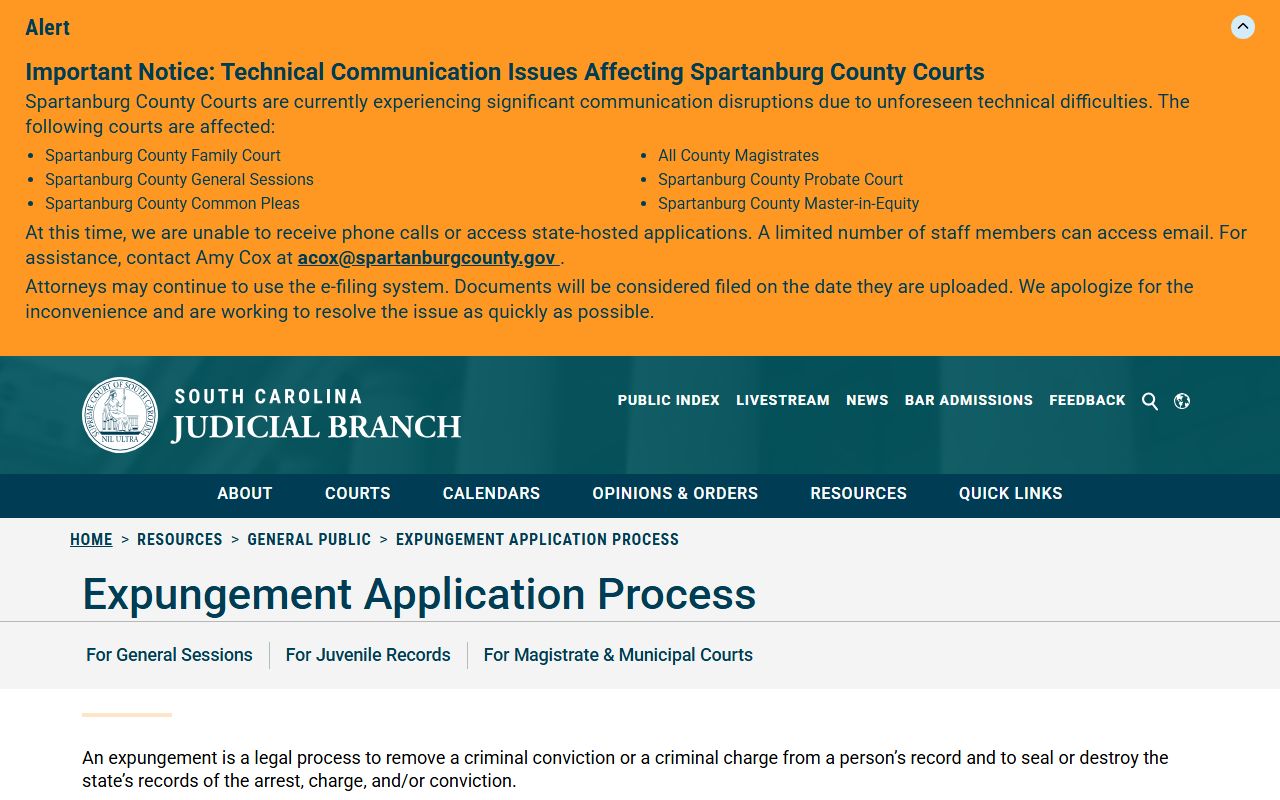
For General Sessions matters from Darlington County, the Fourth Circuit Solicitor's Office is the local processing and review point described in the research file.
Public Access to Darlington Criminal Records
Criminal court records are public only to the extent state law, court rules, and confidentiality rules allow. The South Carolina Freedom of Information Act covers public records of public bodies unless an exemption applies. Court records are also governed by court rules. Rule 41.1 allows sealing under court standards, and Rule 41.2 requires redaction of personal identifiers before filing.
Key Statutes:
S.C. Code Title 17, Chapter 22 governs criminal expungement eligibility and procedures.
S.C. Code Section 63-19-2020 makes juvenile court records confidential except for limited lawful access.
South Carolina's expungement statutes are published in Title 17, Chapter 22.
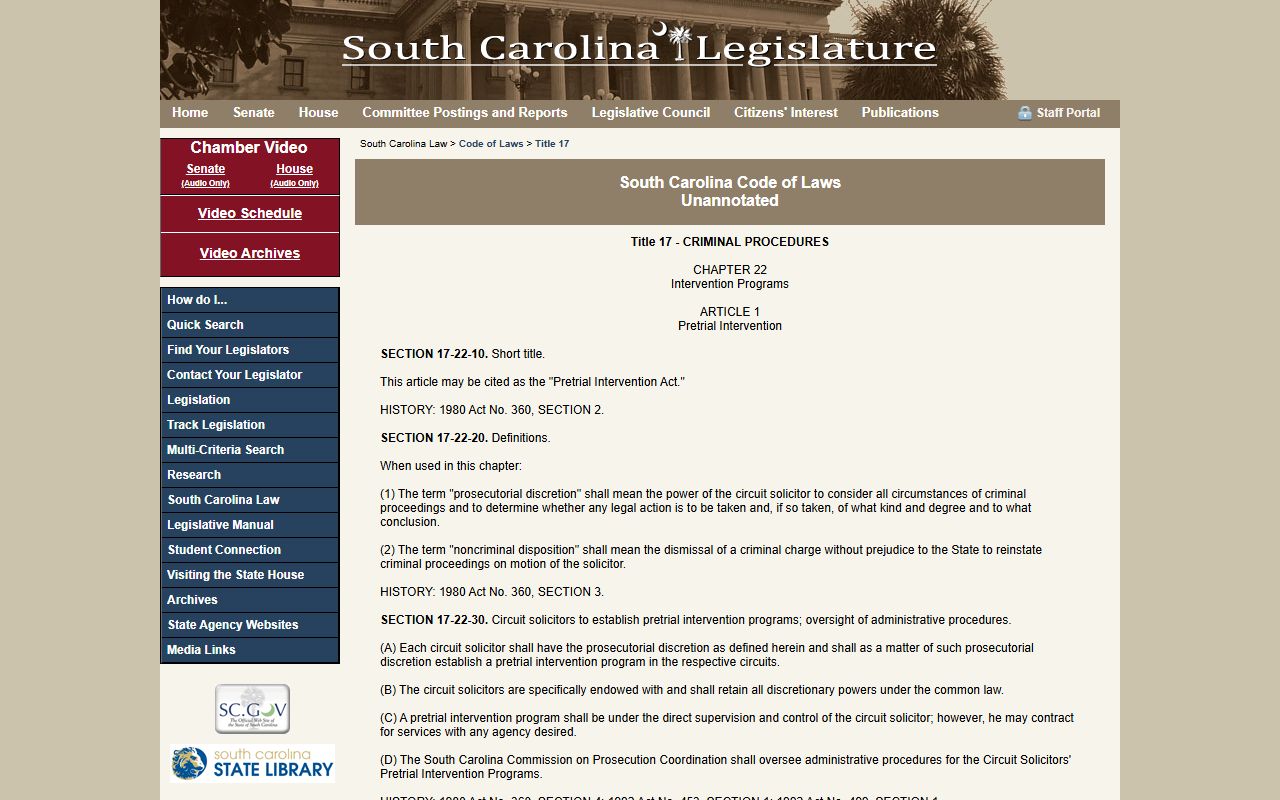
Those statutes matter most when a Darlington County criminal court record shows a dismissal, eligible disposition, or older charge that may qualify for review.
Criminal Background Check Limits
A casual court lookup is not the same as an employment, tenant, insurance, credit, or other regulated background check. A Darlington County criminal court record can help a person understand a case path, but regulated decisions require compliant procedures, current source verification, and lawful use. Court data can also lag new filings, omit restricted details, or show charges that did not end in conviction.
Important: Do not use casual Darlington County criminal court lookups for FCRA-regulated screening decisions.
Restricted Darlington Criminal Records
Restricted criminal records include juvenile matters, sealed cases, expunged records, confidential victim or witness details, personal identifiers, and some law-enforcement-sensitive material. South Carolina Rule 41.2 protects Social Security numbers, driver's license and state ID numbers, passport numbers, bank and credit account numbers, PIN or password data, and similar identifiers. The Judicial Branch also states that home address information is not displayed on the Public Index for new and existing cases as of January 1, 2026.
Juvenile confidentiality is especially important. South Carolina law limits access to juvenile court records to the court, authorized parties, and people with a legitimate interest when a court order or statute permits it. The juvenile confidentiality statute is published by the state in S.C. Code Section 63-19-2020.
When a Darlington County criminal search returns no result, the cause may be a restricted record, a different court level, a new filing delay, or a case number mismatch.